Download PDF Pharmacotherapy A Pathophysiologic Approach Seventh Edition by Joseph T. Dipiro


Sinopsis


Today’s cost-sensitive healthcare environment has created a competitive and challenging workplace for clinicians. Competition for diminishing resources has necessitated that the appraisal of healthcare goods and services extends beyond evaluations of safety and efficacy and considers the economic impact of these goods and services on the cost of healthcare. A challenge for healthcare professionals is to provide quality patient care while assuring an efficient use of resources.
 
Defining the value of medicine is a common thread that unites today’s healthcare practitioners. With serious concerns about rising medication costs and consistent pressure to decrease pharmacy expenditures and budgets, clinicians/prescribers, pharmacists, and other healthcare professionals must answer the question, “What is the value of the pharmaceutical goods and services I provide?” Pharmacoeconomics, or the discipline of placing a value on drug therapy,1 has evolved to answer this question.
 
Challenged to provide high-quality patient care in the least expensive way, clinicians have developed strategies aimed at containing costs. However, most of these strategies focus solely on determining the least expensive alternative rather than the alternative that represents the best value for the money. The “cheapest” alternative with respect to drug acquisition cost is not always the best value for patients, departments, institutions, and healthcare systems.
 
Quality patient care must not be compromised while attempting to contain costs. The products and services delivered by today’s health professionals should demonstrate pharmacoeconomic value, that is, a balance of economic, humanistic, and clinical outcomes.
 
Pharmacoeconomics can provide the systematic means for this quantification. This chapter discusses the principles and methods of pharmacoeconomics and how they can be applied to clinical pharmacy practice and thereby how they can assist in the valuation of pharmacotherapy and other modalities of treatment in clinical practice.

Content

  1. Foundation Issues
  2. Cardiovascular Disorders
  3. Respiratory Disorders
  4. Gastrointestinal Disorders
  5. Renal Disorders
  6. Neurologic Disorders
  7. Psychiatric Disorders
  8. Endocrinologic Disorders
  9. Gynecologic Disorders
  10. Urologic Disorders
  11. Immunologic Disorders
  12. Rheumatologic Disorders
  13. Ophthalmic and Otolaryngologic Disorders
  14. Dermatologic Disorders
  15. Hematologic Disorders
  16. Infectious Diseases
  17. Oncologic Disorders 
  18. Nutrition Disorders

Download PDF Cancer Chemotherapy & Biotherapy: Principles & Practice 4th Edition by Lippincott Williams & Wilkins


Sinopsis

Cancer treatment requires the cooperative efforts of multiple medical specialties. Although surgeons traditionally have been the first specialists to treat the cancer patient, newer modalities have created important roles for the radiotherapist and medical oncologist in the initial management of cancer patients, and responsibility for care of the majority of patients with metastatic cancer is in the hands of these specialists. The array of alternatives for the treatment of cancer is constantly expanding. With the demonstration of effectiveness of new drugs and new biologics, and with the evolution of more effective strategies for integrating chemotherapy, surgery, and radiation, the development of a treatment plan becomes increasingly complex. The plan must be based on a thorough understanding of the potential for beneficial response and an awareness of the acute and later toxicities of each component of the treatment regimen. As a general rule, the medical oncologist is urged to use standard regimens as described in the Physician Data Query (PDQ) system of the National Cancer Institute (NCI).a PDQ contains information on state-ofthe- art treatments for each pathologic type of cancer, as well as a listing of experimental protocols for each disease. An important alternative to “standard” therapy is the clinical trial, which should be considered for every eligible patient. Such trials offer alternative treatment that is thought by a panel of experts to be at least as effective as the recognized standard of care. In phase III (randomized) trials, a standard regimen is compared with a new one that may represent an improvement. With either choice, standard therapy or a clinical trial, the medical oncologist must understand the potential benefits and risks of using specific drugs or combinations of drugs, or combinations of drugs and biologics, often integrated with surgery and irradiation. All these considerations enter into the choice of a treatment plan. Steps in the treatment decision-making process are discussed in this chapter to provide the reader with an understanding of the overall role of drugs in cancer treatment.

Content

  1. Clinical Strategies for Cancer Treatment: The Role of Drugs
  2. Preclinical Aspects of Cancer Drug Discovery and Development
  3.  Pharmacokinetics
  4. Infertility After Cancer Chemotherapy
  5. Carcinogenesis of Anticancer Drugs
  6. Antifolates
  7. 5-Fluoropyrimidines
  8. Cytidine Analogues
  9.  Purine Antimetabolites
  10. Hydroxyurea
  11. Antimicrotubule Agents
  12.  Clinical and High-Dose Alkylating Agents
  13.  Nonclassic Agents
  14.  Cisplatin, Carboplatin, and Oxaliplatin
  15. Bleomycin
  16. Antitumor Antibiotics
  17. Topoisomerase I–Targeting Drugs
  18. Anthracyclines and Anthracenediones
  19. Topoisomerase II Inhibitors: The Epipodophyllotoxins, Acridines, and Ellipticines
  20. Asparaginase
  21. Delivering Anticancer Drugs to Brain Tumors
  22. Food and Drug Administration Role in Oncology Product Development
  23. Central Venous Catheters: Care and Complications
  24. Pharmacogenetics
  25. New Targets for Anticancer Therapeutics
  26. Bisphosphonates
  27. Thalidomide and Its Analogs for the Treatment of Hematologic Malignancies, Including Multiple Myeloma and Solid Tumors
  28. Inhibitors of Tumor Angiogenesis
  29. Proteasome Inhibitors
  30. Molecular Targeted Drugs and Growth Factor Receptor Inhibitors
  31. Antibody Therapies of Cancer
  32. Interferons
  33. Adoptive Cellular Therapies
  34. Cancer Vaccines
  35. Hematopoietic Growth Factors
  36. Interleukins
  37. Hormonal Therapy for Breast Cancer


Download PDF ACT Dade Simple : An Easy-to-Read Primer on Acceptance and Commitment Therapy : A Quick-Start Guide to ACT Basics and Beyond by Russ Harris


Sinopsis

Few people come to ACT and dive in head first. You, like most, may start off by dipping a toe in the water. Next, you put a whole foot in. Then a knee. Then an entire leg. Now you find yourself in this odd position, with one leg in the water and one leg out. And generally you stay there for quite a while, half in, half out, not quite sure if ACT is for you. Finally, one day, you take the plunge. And when you do so, you discover the water is warm, welcoming, and invigorating; you feel liberated, buoyant, and resourceful; and you want to spend a lot more time in it. Once this happens, there’s generally no going back to your old way of working. (So if this hasn’t already happened to you, I hope it will by the end of this book.)

One reason for this initial uncertainty about ACT is that it challenges conventional wisdom and overturns the ground rules of most Western psychology. For example, most models of therapy are extremely focused on symptom reduction. Their assumption is that clients need to reduce their symptoms before they can lead a better life. ACT takes a radically different stance. ACT assumes that (a) quality of life is primarily dependent upon mindful, values-guided action, and (b) this is possible regardless of how many symptoms you have—provided that you respond to your symptoms
with mindfulness.

To put it another way, mindful, values-congruent living is the desired outcome in ACT, not symptom reduction. So although ACT typically reduces symptoms, this is never the goal. (By the way, as “values-congruent living” is a bit of a mouthful, for the most of the book I’ll shorten it to “valued living.” Sorry, I know it’s not great English.) Thus in ACT, when we teach a client mindfulness skills, the aim is not to reduce his symptoms but to fundamentally change his relationship with his symptoms so that they no longer hold him back from valued living. The fact that his symptoms reduce is considered a “bonus” rather than the main point of therapy.

Content

  1. INTRODUCTION
  2. ACT in a Nutshel
  3. Stuck, Not Broken
  4. The House of ACT
  5. Getting Experiential
  6. Opening ACT
  7. Creative What??!
  8. Watch Your Thinking
  9. Open Up
  10. Be Here Now
  11. Pure Awareness
  12. Know What Matters
  13. Do What It Takes
  14. Getting Unstuck
  15. I and Thou
  16. The Therapist’s Journey
  17. Case Conceptualization Made Simple


Download PDF Manual of Pharmacology and Therapeutics Goodman & Gilman’s


Sinopsis

Perhaps there was once a time when most of pharmacological knowledge could fit into a relatively small volume, but that time has surely passed. Even as old knowledge has been pared, the addition of new knowledge has caused pharmacology textbooks to expand. Thanks to aggressive editing, the 11th edition of Goodman & Gilman’s The Pharmacological Basis of Therapeutics is 5% shorter than its predecessor, yet the volume still weighs 4 kg. It’s a wonderful book but clearly too heavy to carry around. Hence, this shorter, more portable version, Goodman & Gilman’s Manual of Pharmacology and Therapeutics. The editors hope that this Manual, will affordably provide the essentials of medical pharmacology to a wide audience. The format of the parent text has been retained but the editors have tried to focus on core material, happy in the knowledge that the full text of the 11th edition, with its historical aspects, many chemical and clinical details, additional figures, and references, is available in print as well as online (at http://www.accessmedicine.com/),
where updates are also published. The editors of this volume thank the contributors and editors of the 11th edition of Goodman & Gilman’s, which formed the basis of this manual. We are grateful to our editors at McGraw-Hill, James Shanahan and Christie Naglieri, to project manger Arushi Chawla, and to the long line of contributors and editors who have worked on Goodman & Gilman’s since its original publication in 1941. It is a tribute to Alfred Gilman and Louis Goodman that their book is alive and vigorous after 66 years.

Conetent

  1. GENERAL PRINCIPLES
  2. DRUGS ACTING AT SYNAPTIC AND NEUROEFFECTOR JUNCTIONAL SITES
  3. DRUGS ACTING ON THE CENTRAL NERVOUS SYSTEM
  4. AUTACOIDS: DRUG THERAPY OF INFLAMMATION
  5. DRUGS AFFECTING RENAL AND CARDIOVASCULAR FUNCTION
  6. DRUGS AFFECTING GASTROINTESTINAL FUNCTION
  7. CHEMOTHERAPY OF PARASITIC INFECTIONS
  8. CHEMOTHERAPY OF MICROBIAL DISEASES
  9. CHEMOTHERAPY OF NEOPLASTIC DISEASES
  10. IMMUNOMODULATORS
  11. DRUGS ACTING ON THE BLOOD AND THE BLOOD-FORMING ORGANS
  12. HORMONES AND HORMONE ANTAGONISTS
  13. DERMATOLOGY
  14. OPHTHALMOLOGY
  15. TOXICOLOGY


Download PDF Emotion-Focused Cognitive Therapy by Mick Power


Sinopsis

Psychology lost its soul at the beginning of the twentieth century with the joint onslaught of both American and Russian Behaviourism. As John Watson famously said, ‘the soul is not the remit of science’. However, in the 1950s psychology at least regained its capacity to think – cognitive psychology was reputedly born at a symposium at the Massachusetts Institute of Technology on 11 September 1956 (see Bruner, 1983) and the subsequent development of cognitive science has swamped psychology and the many adjoining areas of linguistics, anthropology, philosophy and artificial intelligence. We should of course be grateful that we are no longer trapped in the onedimensional world of behaviourism, in which we are no better than headless chickens (or pigeons, or rats) running around the farmyard, cage or Skinner Box. Cognitive science has at least given us more computational power – unfortunately, the behaviourist’s computer would still have us using the abacus, or a mechanical equivalent.

And in the field of therapy, cognitive science has given us the many and varied cognitive and cognitive behavioural therapies. Yes, of course we should be grateful to be given back our thinking minds. At least the cognitive and cognitive behavioural therapies acknowledge that we have thoughts and beliefs and assumptions and schemas. It often makes sense to our clients that theymay overvalue one thought at the expense of another, or they may have a mistaken belief about their own worthlessness as people, or they may believe that they are about to die of a heart attack when they are not.We knowas clinicians that many of our clients can be helped by examining their cognitions and by examining the possibility that alternative cognitions would be more functional and would help them improve their well-being and general life satisfaction.

Cognitive science and cognitive behavioural therapies can absolutely be congratulated for the benefits they have brought to academics, to clinicians and to clients. But unfortunately something has been left out in these great strides forward – and that is emotion. There has been growing recognition in the past 20 years or so that cognition is not enough.We may now be able to produce computers that can play a good game of chess, but we are yet to see a computer commit suicide because it was rejected in love, or take out a gun and shoot someone because of an insult to its mother (or perhaps its motherboard?). Much of what we do as humans is motivated by emotion. We build a monument to the person we have loved and lost because we are overwhelmed with grief and want to find a way to express those emotions. We strive for wealth, fame and success because we believe those things will make us happy – whether or not they will – if or when we ever achieve them. We move to another country and learn to speak Russian because we fall in love.We avoid leaving the house at a certain time because we hate our neighbours, who leave rubbish in our drive-way because they hate us! We teach our children to look right and left as they cross the road because we are terrified of what might happen to them if they carelessly forget. The list of emotion-motivated things we do is endless. Emotion is constantly with us and guiding us, for that is its purpose.When emotions function well and properly, they help us to prioritize, to work when we would rather play, to choose between otherwise impossible choices, and to avoid situations and objects that might be dangerous or unhealthy or disease ridden. The well-functioning emotion system is there to guide and protect – emotions are the 10 commandments of the psychological world. But as any powerful system, the emotion system can run out of control. Danger can be signalled when there is no objective danger – the harmless spider in the bath really does not warrant that level of panic and disgust. Or, the person can be so overwhelmed by feelings of despair and self-disgust that he or she would rather be dead. Or, the driver cutting in front of us can instantly fill us with an inexplicable feeling of road rage that causes us to put lives in danger.

Content

  1. Introduction
  2. WhatisanEmotion?
  3. Therapy 
  4. The Assessment of Emotion 
  5. Too Much Emotion 
  6. Too Little Emotion 
  7. Additional Topics 
  8. An Overview of EFCT


Download PDF Happiness, Healing, Enhancement: Your Casebook Collection For Applying Positive Psychology in Therapy by George W. Burn


Sinopsis

Is psychotherapy a place where clients would consider going to talk about their strengths? Is psychotherapy a place where therapists would routinely inquire about a client’s strengths as a part of their initial assessment and ongoing therapy? It is unlikely this is what Emma was expecting when she presented to therapy with a slight weight problem, saying ‘‘I eat when I am bored, frustrated, anxious and angry—for psychological reasons. It makes me happy.’’ However, it was not until the second session that she revealed the real, embarrassing, and distressing reason for attending.

What she believedmade her happy was quite specific: chocolate.With almost any emotional swing she would gorge on a family-size block of chocolate, a full package or two of chocolate cookies, or a container of chocolate milk. Trying to stop any long-established behavior can be difficult, especially if it is an approach behavior, meets a psychological need, and offers such strong rewards as the chocolate was doing for Emma. It provided instant pleasure when she was in distress, and she had empowered it with the ability to ‘‘make’’ her happy. To direct therapy toward stopping something that served as an effective, thoughmaladaptive, coping strategy with such powerful rewards was obviously going to be an uphill battle.

With the exception of one or two therapeutic approaches, such as Ericksonian or solution-focused therapy, or with the occasional therapist, few therapies or therapists have oriented themselves toward spotting, enabling, and developing client strengths. Therapists and therapeutic models usually are very well versed in, and have good clinical strengths in, problem-spotting and weakness-spotting.

Content

  1. Strengthspotting
  2. We Will Be Laughing Again
  3. What Is Right with Him?
  4. The Why, Not the What
  5. From Here to Where You Want to Be
  6. You Want Me to Fix It?
  7. Putting the Lid on the Divorce Monster
  8. Development through Disability
  9. From Vulnerability to Skillfulness
  10. Do You See the Forest or the Tree?
  11. Now I Can Get on with Life
  12. Empowering Lisa
  13. Can Helping Others Help Oneself?
  14. Doing Nothing, Changing Profoundly
  15. Laying Out in Anxiety
  16. Playing with the Moment
  17. Can You Be Happy in Pain?
  18. Charting a Course to New Beginnings
  19. A Surprise Attack, A Surprise Result
  20. Sunsets and Seashores
  21. A Dream of Creative Menopause
  22. Can We Play Again?
  23. Inspiring Change
  24. A Positive Way of Addressing Negatives 
  25. There Is a Fly in the Urinal
  26. Soaring to New Heights
  27. Are There Times Not to Use Positive Therapy?


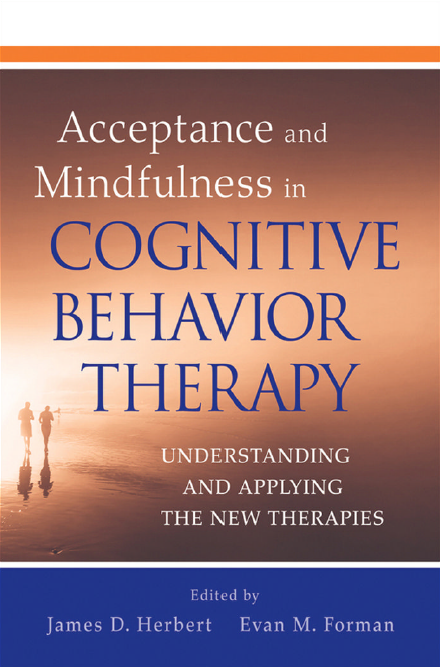
Download PDF Acceptance and Mindfulness in Cognitive Behavior Therapy : Understanding and Applying the New Therapies by James D. Herbert And Evan M. Forman


Sinopsis

Cognitive behavior therapy (CBT) has now become the dominant force in psychotherapy in much of the world, including North America, the United Kingdom, much of Europe, and increasingly throughout Asia and Latin America. The rise of CBT is due to the confluence of several factors, primary among which is the increased focus on evidence-based practice and associated calls for accountability in the delivery of behavioral health services (Baker, McFall, & Shoham, 2009). Throughout its history, CBT has been committed to a scientifi c perspective to the study of psychopathology and its treatment. Hundreds of studies have evaluated various cognitive behavioral theories of psychopathology, and hundreds more have assessed the efficacy of CBT interventions. Th is scientific literature has placed CBT in a unique position to dominate the field of psychotherapy.

Content

  1. Th e Evolution of Cognitive Behavior Therapy: The Rise of Psychological Acceptance and Mindfulness
  2. Cognitive Therapy
  3. Mindfulness-Based Cognitive Therapy
  4. Metacognitive Therapy
  5. Emotional Schema Therapy: A Bridge Over Troubled Waters
  6. Mindfulness-Based Stress Reduction
  7. Dialectical Behavior Therapy
  8. Behavioral Activation in the Context of “Third Wave” Therapies
  9. Integrative Behavioral Couple Therapy: An Acceptance-Based Approach to Improving Relationship Functioning
  10. Understanding Acceptance and Commitment Therapy in Context: A History of Similarities and Differences With Other Cognitive Behavior Therapies
  11. Mindfulness and Acceptance: Th e Perspective of Cognitive Therapy
  12. Mindfulness and Acceptance: Th e Perspective of Acceptance and Commitment Therapy
  13. Mindfulness and Acceptance in Cognitive Behavior Therapy: What’s New?


Download PDf Time Line Therapy And Basic Of Personality by Tod James & Wyatt Woodsmall


Sinopsis

Time Line Therapy and The Basis of Personalityis a study of most of the important elements that make up a person's core personality. These include Time Line Therapy (Memory Storage), Meta Programs and Values.

Time Line Therapy. Utilizing discoveries by Richard Bandler, the authors have expanded and updated our knowledge of how people actually store their memories, and the effect that the system used for the storage of memories has on the personality of the individual. The authors contend that the concept of Time Line, or the notion of time that you have stored in your mind, shapes and structures your experience of the world, and therefore shapes your personality.

Meta Programs. Meta Programs are the most basic filters that process the sensory data that we receive from the outside world. Knowing a person's Meta Programs can assist in the prediction of their behavior, and can assist in communicating to them. The authors' work in this area is well known, and is the most thorough available on the subject of Meta Programs.

Values. Values also serve as filtering mechanisms in the processing of our sensory data, and as such they are the most basic level of filters that have content in and of themselves. Values are more basic than beliefs, providing the push behind our motivation, and provide the selection criteria for our strategies. Values are how we evaluate right and wrong, and are the basis for our evaluation of our behavior

Content

  1. Time Line Therapy
  2. Meta Programs
  3. Values